Evening Thoughts
5 Italian Evening Traditions to Bring into Your Home
In Italy, the evening has a shape. It begins when the heat lifts off the pavement and the shutters come up, and it ends with a light left on in the hallway. Between those two moments there are walks, tables, glasses, cards and a few pages of a book: small rituals that ask very little of you and give back a surprising amount.
You don't need a stone piazza or a grandmother in the kitchen to borrow them. You need about forty minutes and the willingness to do the same small thing most nights. Here are five traditions worth taking home, with honest notes on how to make them fit real life.
1. The passeggiata: a walk with no purpose
The passeggiata is the one that surprises people most. It looks like a walk and behaves like a social ritual. In Italian towns it happens in the hour before dinner, when the light softens: people come out, walk a loop through the centre, stop to talk, and go home hungry. Nobody is training for anything. Nobody is wearing the right shoes for it.
What makes it work is that it has a time and a route. That is the whole trick, and it transplants easily.
- Choose a fixed slot. Twenty-five minutes, roughly the same time each evening, ideally before you cook rather than after you eat.
- Choose a loop, not a destination. Around the block twice, down to the corner and back, along the same few streets. Repetition is the point.
- Leave the headphones at home. The passeggiata is for noticing: the neighbours' roses, whoever is repainting their shutters, the man at number 14 who walks his dog at exactly the same moment you do.
- Greet people. A nod, a good evening, a comment about the weather. It will feel strange for three days and normal by the tenth.
If it rains, walk to the shop for milk at the slow pace you would use on a piazza. If you have children, let them set the speed. This is one of the few evening rituals where dawdling is a feature rather than a problem.
2. The aperitivo hour: small, slow, and not a second dinner
The aperitivo is often mistranslated as a drinks party. It is closer to a pause with a glass in it: one drink, a few salty things to eat, and the deliberate refusal to do anything useful for half an hour before dinner.
The failure mode is obvious. It turns into a second dinner, or a third drink, or a scroll through your phone with something cold in your hand. Keep it small instead. A small glass of something bitter, or sparkling water with a strip of orange peel if you don't drink; a bowl of olives, some crisps, a few squares of cheese. Sit down — standing at the counter is for people who are about to leave. Set an end point before you start, because the whole tradition depends on dinner still happening afterwards.
This is also the ritual that rescues an evening when you are too tired to cook properly. Half an hour of sitting still with someone, with something to nibble, tends to make the following hour much more civilised.
3. A table set for dinner, not for the sofa
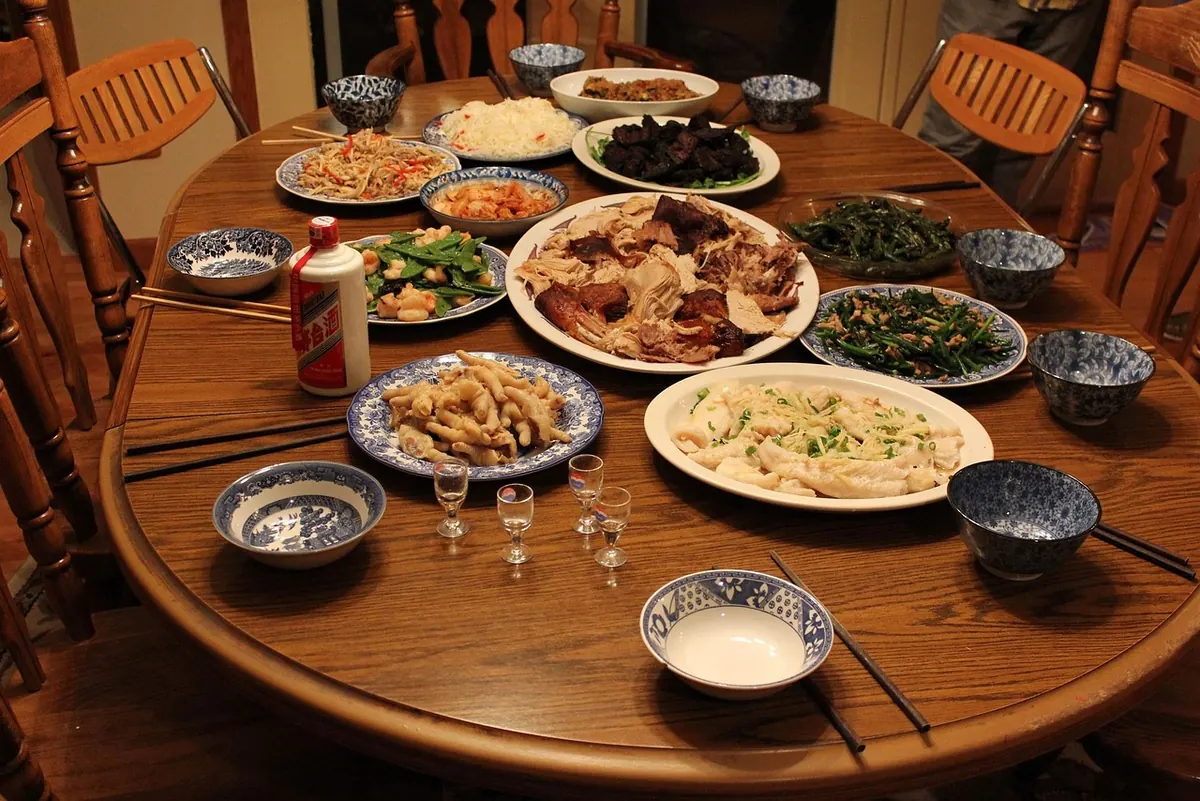
Sunday lunch gets the attention, but the daily cena is the real institution: the table laid properly, the television off, everyone at the same table at the same time, even if the meal is pasta and a piece of fruit.
The full structure — antipasto, primo, secondo, contorno, fruit, coffee — belongs to occasions, not to Tuesdays. What you want to borrow is the shape: a table you have to set, a plate you have to sit down for, and a conversation that isn't only about logistics.
A weeknight version that survives real life
- One course, done well. Pasta with garlic and oil, a frittata, soup with bread. Nobody is grading it.
- Real plates and cloth napkins. Small effort, enormous difference in how the meal feels.
- A basket for phones. Not a lecture about screen time; simply a place for them that isn't the table.
- One question that isn't "how was school". What were the best ten minutes of your day? What would you cook tomorrow if it were up to you?
- Nobody gets up until the plates are cleared. Ten minutes of sitting together after eating is where most of the actual talking happens.
If you live alone, this still applies. Set the table, leave the phone in another room, eat something you actually like, and stay sitting for a few minutes afterwards. Eating standing up at the counter is efficient and forgettable; a table is neither.
4. Cards, coffee, and the ten minutes after the plates
In many Italian homes the plates are cleared and nobody moves. Coffee appears, a bottle of something comes out, someone finds the deck of cards. Briscola, scopone, tresette — the games are simple and mostly consist of arguing over the rules.
The tradition underneath is that stretch of time after dinner, which in a busy week is often the only unscheduled half-hour a household has. You don't need a card game to claim it. You need to stop treating the end of the meal as the end of the evening.
Try one of these:
- A deck of cards. Briscola is easy to learn and takes fifteen minutes. Two players or four.
- A short walk. The second, smaller passeggiata: to the end of the street and back, to look at the sky.
- Coffee on the balcony or the front step. Even in winter, for the length of one cup.
- A proper conversation. One topic, agreed in advance: a place you would both like to go, a decision you keep postponing, a memory of the same holiday.
Whatever you choose, keep it short and repeatable. A ritual you can manage on a Wednesday is worth more than a perfect one you do twice a year.
5. Reading in bed, the quietest tradition
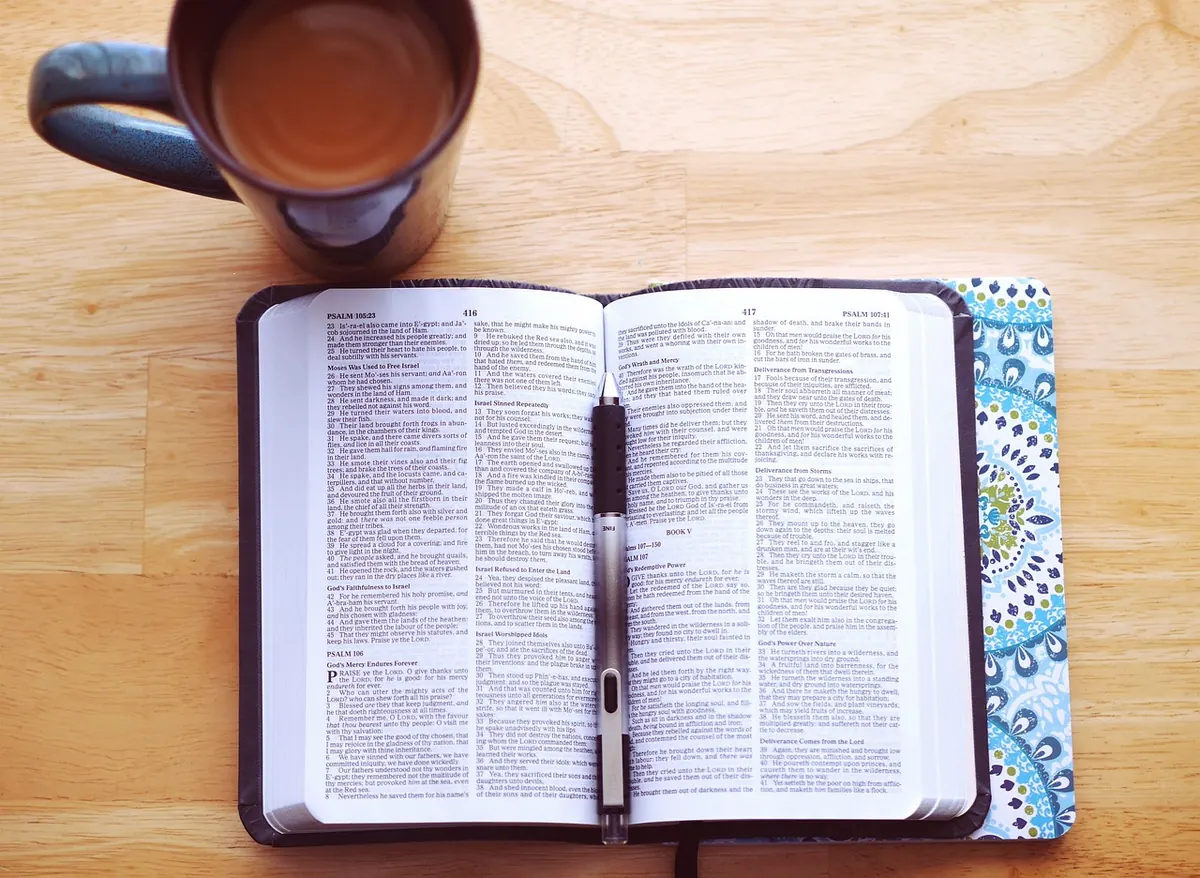
Reading before sleep is the most easily lost of the five, and the one that changes the tone of a day most reliably. In Italy it is simply ordinary: a book on the nightstand, a lamp, twenty minutes before the light goes off.
The practical version is unglamorous. A paper book if you can, because a phone in bed is not a book even when it has one on the screen. A lamp rather than the ceiling light. A stopping point decided in advance — a chapter, or twenty pages, whichever comes first.
If there are children in the house, don't stop reading aloud the moment they can read by themselves. Chapter books at bedtime work until surprisingly late, and it is one of the few routines you will both remember. Fifteen minutes, one chapter, no negotiating for a second.
If falling asleep is a genuine and persistent problem rather than an occasional one, treat this as a good habit rather than a cure and speak to a doctor. A routine helps; it isn't medicine.
Start with one evening, not five
Five traditions sound like a programme. They aren't. Pick the one that solves the problem your evenings actually have: the one where everyone scatters after eating, or the one where you eat standing up, or the one where the last hour before bed disappears into a screen.
Do it at the same time each night for a fortnight, and expect it to feel slightly forced for the first three or four days. That is normal. Rituals are awkward before they are automatic.
Then add a second one, and keep only the ones that make the evening feel longer rather than busier. A tradition that turns into a chore has stopped being a tradition; the point of these is that they ask very little and give the day a soft ending.
Set the table tonight. Or put your shoes on and walk around the block. Both count.
Photo: Goodfreephotos_com / Pixabay