Reflections
The Art of the Passeggiata: Why Italians Walk in the Evening
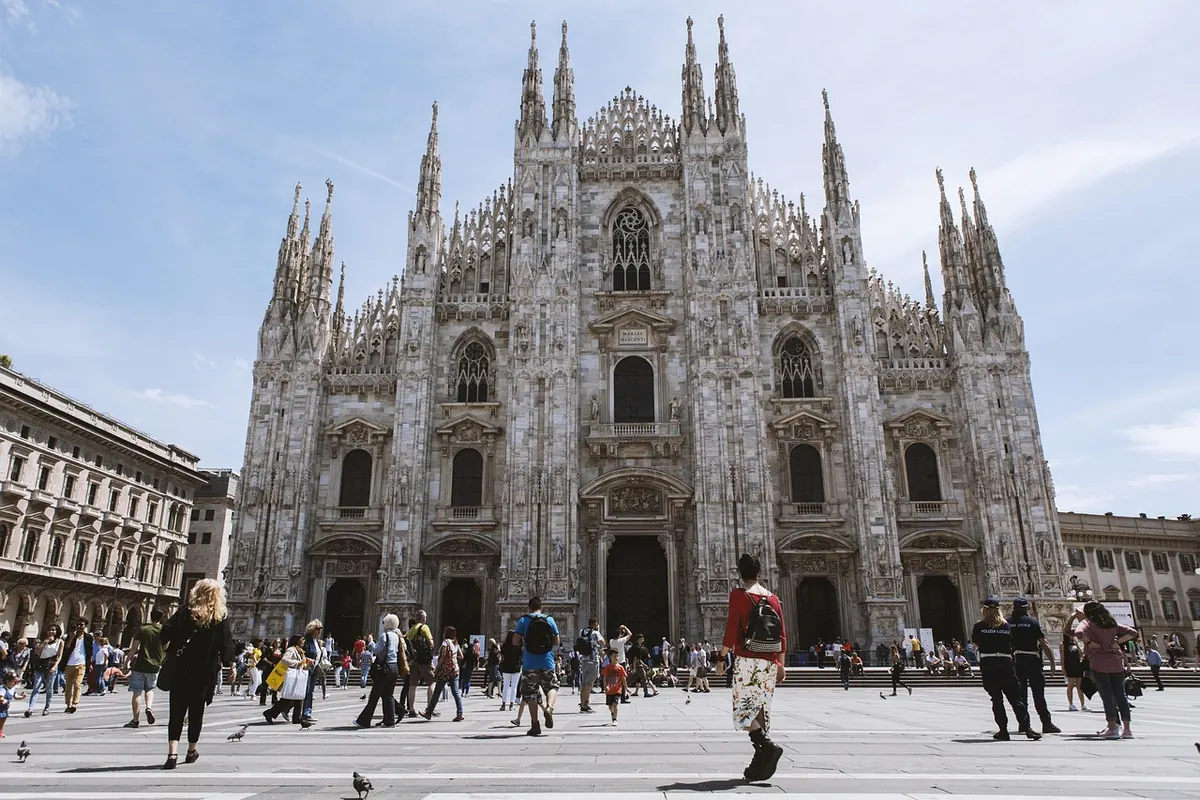
At half past six the shutters begin to come down. Not because the shops are closing — several are just reopening after the afternoon lull — but because the day has changed gear. Near the cathedral a man in a pressed shirt stops to greet a neighbour he has greeted every evening for thirty years. A grandmother pushes a pram at a pace that suggests no destination at all. Two teenagers orbit the piazza once, then again, then a third time for good measure.
This is the passeggiata, the evening walk. From the outside it looks like nothing much: people in clean shirts moving slowly through the same few streets. Watch it for a week and you start to notice how much is happening inside that slowness. It is a ritual of belonging that costs nothing, requires no equipment and has been running, more or less unchanged, for generations.
What the passeggiata actually is
The word simply means "a walk," but the Italian version carries rules the dictionary leaves out. It is not exercise. Nobody changes into sportswear, nobody counts steps, nobody finishes flushed and triumphant. It is not a commute either, because there is no place to be. And it is rarely solitary in spirit, even when you walk alone.
A passeggiata usually runs between half an hour and an hour. It happens in the same handful of streets, which is the point: you go where you will be seen. You dress a notch above the occasion — a clean shirt, proper shoes, hair dealt with. You walk slowly enough to be interrupted, because being interrupted is the main event. And you end up, more often than not, sitting somewhere with a coffee or a small glass of something, watching the rest of the town do the same thing.
Why the evening, specifically
Timing is doing a lot of work here. The evening walk sits in the seam of the day, after work has been set down and before dinner is on the table. That gap is short, but it is real, and it belongs to nobody in particular. Filling it with a slow loop through the centre gives the day a hinge.
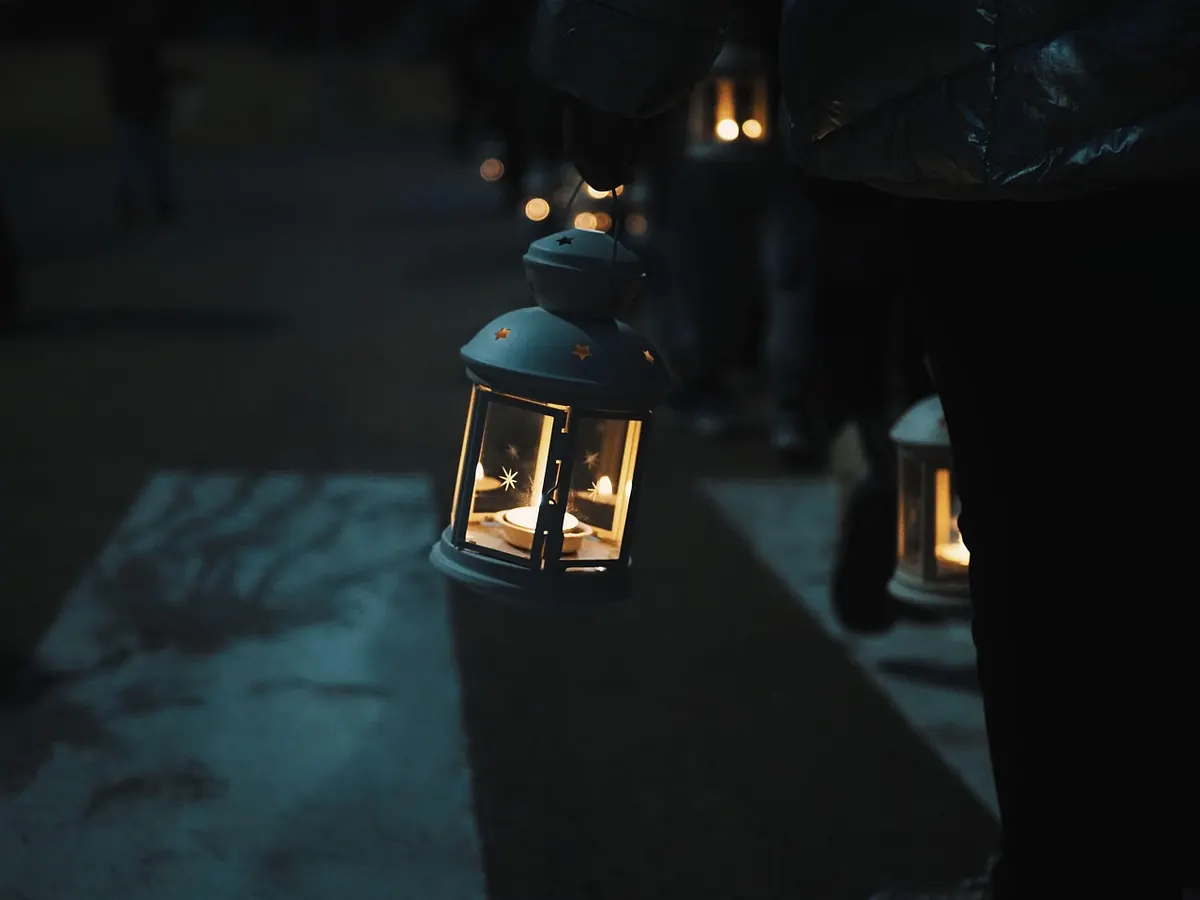
Light matters too. In summer, the walk waits for the heat to break, then takes advantage of the hour when stone walls give back the warmth they stored all afternoon. In winter it happens in the dark, which changes the whole character: windows glow, voices carry, and the streets become a series of small stages. Either way, the walk marks the moment when the day stops being productive and starts being social.
There is also a practical, unglamorous reason. In a town where people live close together, the evening is the least conflicting hour. Shops are winding down, kitchens are between courses, children have been retrieved from wherever they were. Almost everyone is free at once. Very few institutions can claim that.
The unwritten etiquette
Nobody hands you a rulebook, but the codes are consistent enough to learn in an afternoon:
- Walk slowly enough to be interruptible. If you cannot stop mid-stride and talk for three minutes without checking the time, you are moving too fast.
- Greet, but do not detain. A nod, a "buonasera," a question about a mutual acquaintance. Two minutes is generous; five means someone has news.
- Dress for the street, not the sofa. The passeggiata is a mild public appearance, and the effort is read as respect for the people you will meet.
- Leave the phone in your pocket. Headphones turn a social act into a private one, which defeats the purpose.
- Loop rather than march. Out and back along the same street, or two or three circuits of the piazza. Repetition is how you get seen, and how you see.
- Sit down at some point. A bench, a café table, the low wall by the fountain. The walk is only half the ritual; the watching is the other half.
- Go with someone, or go alone. Both are accepted. A solo walker is still participating — that is the whole design.
Small talk is the point, not the filler
People who find the passeggiata baffling tend to object that nothing happens. Nobody makes plans, nobody solves anything, the conversation rarely rises above the weather and whose cousin is visiting. That is an accurate description and a complete misreading.
What is being built is a web of low-stakes contact. You learn that the woman two doors down has hurt her wrist, that the baker's son has started at a new school, that the family on the corner has finally fixed the gate. None of this is urgent. All of it is the raw material of being known, and it only accumulates through repetition. One conversation about the weather is nothing. Four hundred of them over a decade are a neighbourhood.
The value is in showing up, not in saying anything memorable
This is where the ritual quietly outperforms most modern attempts at community. A book club requires reading and a fixed evening. A dinner party requires cooking and a guest list. A passeggiata requires shoes. The barrier to entry is so low that people actually do it, week after week, and consistency does the rest.
What makes it hard to copy
Most of us already walk. We walk to the station, to the shop, around the park with the dog. What we rarely do is walk with no purpose and no hurry, in a place where we might run into someone we know.
The obstacles are not mysterious. There is the phone, which fills the silence that would otherwise make us look up. There is the car, which turns every outing into a point-to-point journey and hides us from the street. There is the assumption, common in busy seasons of life, that time not spent on something productive is time lost. And there is the layout of many neighbourhoods, built around roads rather than squares, with nowhere to loop.
None of these is fatal. They just need to be worked around deliberately, and the working-around is easier than it sounds.
Starting your own passeggiata
You do not need Italy, a piazza or a cultural inheritance. You need a route, a time and a small amount of nerve.
- Choose a short loop. Ten to fifteen minutes end to end, ideally with a bench or a café at the midpoint. The same loop every time is not boring; it is the mechanism.
- Fix the hour. Shortly before dinner works well, because the day is already ending and the walk is not competing with anything. Put it in the calendar for the first fortnight if that helps.
- Go three times before judging it. The first walk will feel awkward and the second pointless. By the third, someone will nod at you, and the thing starts to have a life.
- Speak first. A comment about the weather, the dog, the state of the hedge. Keep it to a sentence and do not hold anyone hostage.
- Change out of the house clothes. This sounds fussy. It changes how you carry yourself and how people read you.
- Leave the phone at home, or at least in a pocket. If you must bring it, treat it as something for emergencies rather than company.
- Invite one person, once. Not a group, not an event. One person, one loop. If they enjoy it, they will suggest it again themselves.
Give it a season. The pleasure of the passeggiata is not in any single evening; it is in the accumulation — the moment when your route stops being a set of streets and becomes a cast of characters, and the walk stops being something you decided to do and becomes something you would miss.
A note on the practical side: if you have mobility limits, a heart condition or any health concern that affects walking, build the ritual around what your body allows — a bench, a balcony, a slow half-block — and check with a doctor about what is sensible for you. The spirit of the thing survives at almost any scale.
Photo: SoyKhaler / Pixabay